When Grand Theft Auto: San Andreas launched in 2004, it pushed the PlayStation 2 hardware to its limits. Its massive map, dynamic weather, character customization, and cinematic storytelling were ambitious for its time. The visual style leaned into technical limitations — soft lighting, thick atmospheric fog, and simplified character models — yet those constraints contributed to a distinctive mood. Los Santos felt sun-drenched and hazy, San Fierro moody and industrial, and Las Venturas neon-lit and sharp. Despite low polygon counts and basic textures, the world felt cohesive and immersive because its art direction compensated for hardware restrictions.
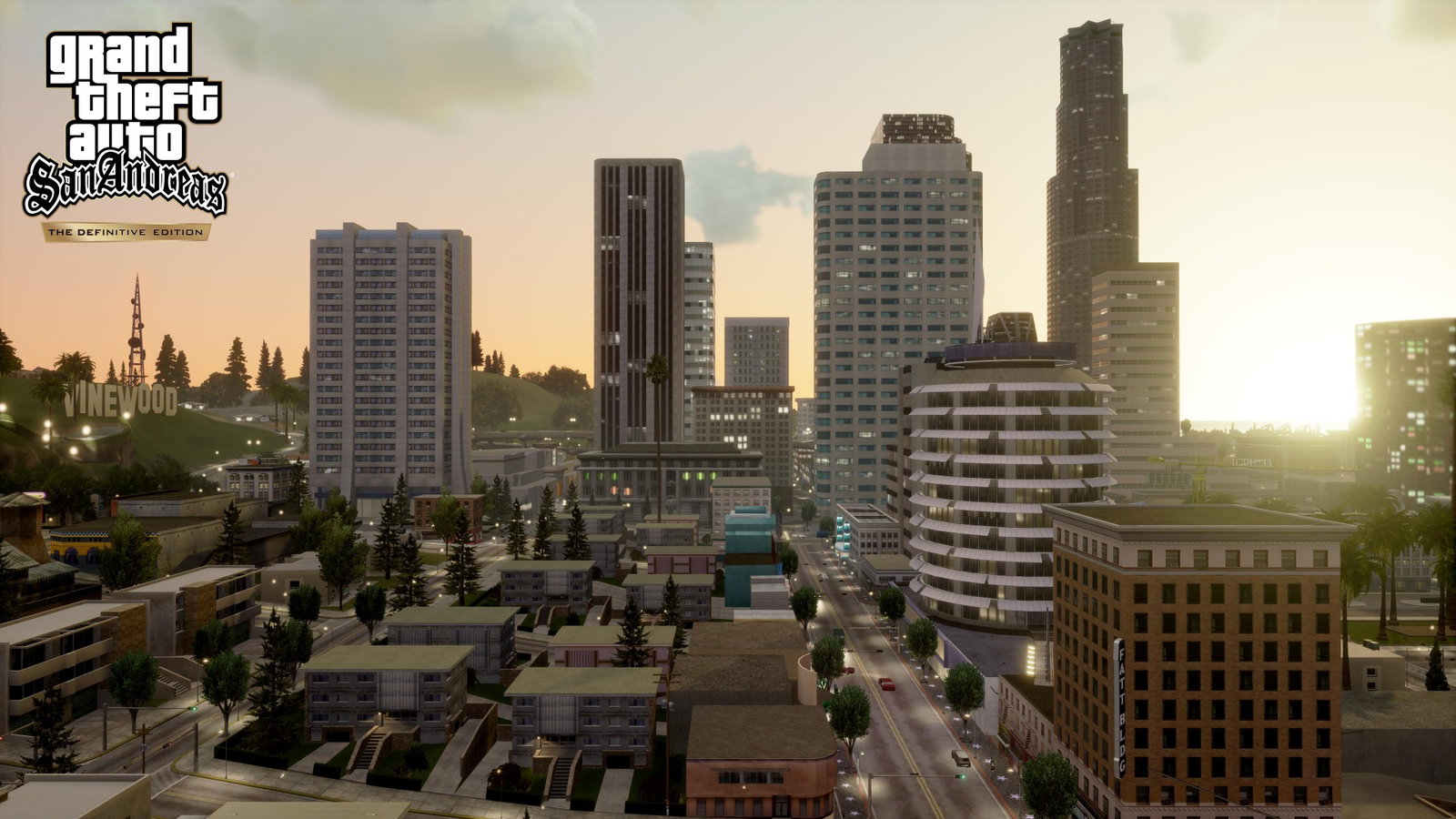
With Grand Theft Auto: San Andreas – The Definitive Edition, Rockstar aimed to modernize that experience for contemporary platforms. Built using Unreal Engine technology, the remaster introduced higher-resolution textures, improved lighting systems, longer draw distances, and enhanced reflections. The intention was clear: preserve the original design while upgrading visual clarity for modern displays. However, the shift from stylized technical compromise to digital sharpness created noticeable differences in atmosphere. Comparing the two versions reveals not just graphical evolution, but a transformation in how the world feels.
Lighting and Atmosphere: Mood vs Clarity
In the 2004 release, lighting was largely pre-baked and heavily stylized. The signature orange haze over Los Santos became iconic, partly because distance fog masked rendering limitations while enhancing depth perception. Nighttime scenes were darker, headlights pierced through thick ambience, and interiors felt shadow-heavy. This gave San Andreas a cinematic tone that matched its early-2000s West Coast aesthetic. The environmental limitations inadvertently created cohesion. Fog wasn’t just technical camouflage — it shaped the game’s identity.
The Definitive Edition dramatically increases draw distance and sharpens environmental lighting. Sunlight appears brighter, street surfaces reflect more realistically, and neon signage pops with clarity. However, removing much of the heavy fog changes environmental mood. Areas that once felt mysterious or distant now appear more open and exposed. While the technical improvement is undeniable — particularly on high-resolution monitors — some players argue that the remaster sacrifices subtle atmospheric charm in favor of visibility. It’s not necessarily worse; it’s simply more transparent and less stylized.
Character Models and Animation Detail
Character models represent one of the most discussed differences between versions. In 2004, CJ and supporting characters had angular facial structures, simplified textures, and limited animation blending. Expressions were minimal, but the exaggerated proportions matched the game’s slightly caricatured tone. Clothing customization looked basic, yet it aligned with the era’s design standards. Despite polygon limitations, the original models maintained consistency with the surrounding world.
The Definitive Edition introduces smoother character geometry, more detailed skin textures, and updated animation rigs. Faces appear rounder, eyes more defined, and clothing materials more textured. Yet this is also where stylistic debate intensifies. The increased smoothness sometimes contrasts with the game’s exaggerated art direction. Certain character proportions feel less grounded in the original aesthetic. While technically superior in resolution and detail, the updated models shift from stylized realism to something closer to modern cartoon realism. Whether this feels like improvement depends heavily on player expectation.
Environmental Textures and World Detail
Texture resolution in the original version was limited by console memory constraints. Road surfaces, building facades, and vegetation often repeated patterns. Yet those textures blended effectively due to distance fog and softer lighting. Environmental detail was implied rather than explicitly rendered. This allowed imagination to fill gaps, particularly in rural zones and mountain areas.
In the Definitive Edition, textures are sharper and far more readable. Graffiti, signage, and storefront text appear clearer. Ground surfaces show more variation, and vegetation density increases in certain regions. However, increased clarity exposes environmental simplifications that were previously hidden. Large empty spaces appear more obvious, and certain reused assets become easier to notice. Higher resolution doesn’t automatically equal greater density — it simply reveals what was always there.
Key Visual Improvements in The Definitive Edition
-
Significantly extended draw distance with minimal environmental fog
-
Higher-resolution textures across roads, buildings, and character clothing
-
Improved shadow rendering and dynamic lighting effects
-
Enhanced reflections on vehicles and wet surfaces
-
Updated character geometry and smoother animation transitions
Visual Elements Where the Original Still Holds Charm
-
Iconic atmospheric haze that shaped city mood
-
Cohesive stylized art direction consistent across characters and world
-
Balanced shadow contrast that enhanced nighttime tension
-
Simpler lighting that masked environmental repetition
-
A nostalgic visual identity tied closely to early 2000s gaming aesthetics
Performance and Technical Stability
Performance differences also influence how graphics are perceived. The original 2004 release was designed specifically for fixed hardware environments, ensuring relatively stable performance despite occasional frame dips. Its visual ambition was tightly aligned with system capabilities. Players rarely questioned performance because expectations matched platform limitations.
The Definitive Edition launched with higher hardware demands, supporting modern consoles and PCs with scalable settings. When optimized correctly, it runs at higher frame rates and supports larger resolutions, dramatically improving motion smoothness. However, early technical issues and inconsistencies impacted initial impressions. Over time, patches have stabilized performance, allowing the graphical upgrades to shine more consistently. Smooth frame pacing combined with improved lighting significantly enhances driving and exploration fluidity.
Final Thoughts: Fidelity, Feeling, and the Passage of Time
Ultimately, comparing San Andreas across these two eras reveals more than improved textures and lighting systems. It highlights how technical constraints shape artistic identity. The 2004 version used limitation as style; the Definitive Edition uses clarity as modernization. Both approaches have merit. The original feels cohesive and moody, shaped by necessity. The remaster feels sharper and more accessible, shaped by contemporary expectation.
For longtime fans, the comparison becomes less about superiority and more about interpretation. The Definitive Edition doesn’t replace the original — it reframes it through a modern lens. Players seeking nostalgia may gravitate toward the atmospheric warmth of 2004, while newcomers may prefer the enhanced visibility and smoother presentation of the remaster. In the end, both versions reflect their technological era, reminding us that visual design is as much about feeling as it is about fidelity.