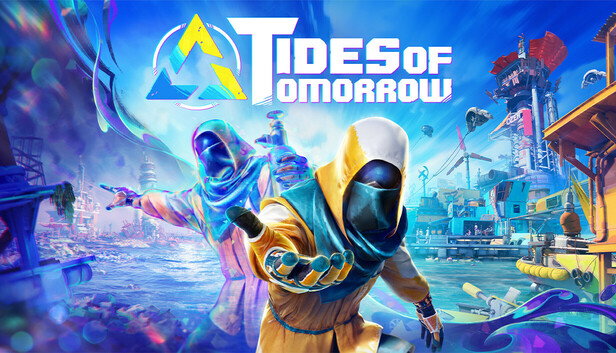
In an industry crowded with fast-paced shooters and competitive live-service titles, Tides of Tomorrow stands out for a different reason: its bold approach to asynchronous multiplayer storytelling. Developed by DigixArt, the studio known for narrative-driven experiences like Road 96, this oceanic adventure focuses less on reflexes and more on consequence, choice, and shared narrative impact. It represents a growing movement toward emotionally intelligent multiplayer design — where players influence each other’s stories without ever being online at the same time.
A World Built on Water and Consequence
Tides of Tomorrow is set in a vast oceanic world where humanity survives across floating settlements and fragmented islands. The setting immediately shapes the tone: isolated, fragile, and deeply interconnected. Every journey across open water carries risk, discovery, and opportunity. Rather than relying on combat-heavy mechanics, the game emphasizes exploration, interaction, and moral decision-making.
The ocean environment is more than aesthetic — it’s systemic. Travel routes shift, settlements evolve, and environmental conditions alter based on cumulative player actions. The sea becomes a living network connecting stories together. This design philosophy reinforces the central theme: individual choices ripple outward, affecting unseen players across the globe.
Asynchronous Multiplayer: A New Narrative Layer
What truly distinguishes Tides of Tomorrow is its asynchronous multiplayer structure. Unlike traditional multiplayer games where players share real-time sessions, this system allows one player’s decisions to subtly alter another’s world later. You may encounter the aftermath of someone else’s moral choice, discover resources they left behind, or face consequences triggered by their actions.
This approach avoids common multiplayer pressures like skill imbalance or toxic competition. Instead, it fosters indirect collaboration and shared storytelling. The concept builds on trends seen in games that experiment with connected worlds but applies them directly to narrative progression rather than just world states.
Asynchronous design also increases accessibility. Players can engage at their own pace without coordinating schedules, making the experience inclusive for global audiences. As gaming communities become more diverse and time-flexible, this system reflects a broader shift toward player-centered design.
Exploration Over Elimination
Where many trending games emphasize elimination mechanics, Tides of Tomorrow leans into discovery. Players navigate the ocean via customizable vessels, scavenging materials, interacting with settlements, and uncovering fragments of a larger mystery. Survival mechanics exist, but they support immersion rather than dominate it.
Island hubs function as narrative anchors. Here, players meet characters whose fates hinge on dialogue decisions and resource contributions. Conversations carry weight, and branching paths create varied storylines. Much like in Road 96, player agency defines tone — whether hopeful, cynical, cooperative, or self-serving.
The result is a game loop built on curiosity rather than competition. Exploration rewards patience, and storytelling rewards empathy.
Artistic Direction and Atmosphere
Visually, Tides of Tomorrow embraces a stylized, painterly art direction. Instead of hyper-realistic water simulations, it opts for expressive lighting, vibrant horizons, and dynamic weather shifts that enhance emotional storytelling. The art style ensures longevity, avoiding the rapid aging that photorealistic graphics sometimes face.
Sound design further deepens immersion. The ambient creak of wood, distant thunder across open waters, and layered musical themes reinforce isolation and hope in equal measure. This atmospheric cohesion positions the game closer to narrative adventures than traditional multiplayer titles.
In an era where technical spectacle often overshadows subtlety, Tides of Tomorrow demonstrates that aesthetic consistency can be equally powerful.
Player-Driven World Evolution
One of the game’s most compelling systems lies in its evolving world state. As thousands of players make decisions, global metrics shift. A settlement might thrive if many players support it — or deteriorate if neglected. Scarcity and abundance become collective outcomes rather than static design elements.
This mechanic introduces a soft social responsibility. Players understand that their actions influence not just their own journey, but the broader ecosystem. It creates a shared narrative memory across the player base.
Such systems mirror the growing trend of live, evolving game worlds. However, instead of focusing on seasonal combat metas, Tides of Tomorrow applies evolution to narrative infrastructure.
The Shift Toward Cooperative Storytelling
Gaming trends reveal an increasing appetite for cooperative and narrative-rich experiences. Players seek meaningful engagement beyond competitive ranking systems. Tides of Tomorrow aligns perfectly with this shift.
The asynchronous structure reduces performance anxiety while preserving communal connection. There are no leaderboards dominating attention; instead, there is shared progression and quiet interdependence.
This design choice may signal a broader evolution in multiplayer philosophy — from direct confrontation toward interconnected storytelling. It challenges the assumption that multiplayer must always be competitive to be engaging.
Longevity Through Emotional Investment
Live-service longevity often depends on frequent content updates. Tides of Tomorrow approaches sustainability differently. Because player choices create branching outcomes, replayability emerges organically. Different moral paths, settlement states, and narrative consequences encourage multiple playthroughs.
Future expansions can layer new islands, factions, or environmental shifts without disrupting the core design. The asynchronous system allows seamless integration of new content streams.
Rather than relying solely on cosmetic monetization or competitive incentives, the game’s retention strategy centers on emotional investment — a rarer but potentially more durable engagement model.
Challenges and Industry Context
While innovative, asynchronous narrative systems carry design complexity. Balancing player influence without creating chaotic or incoherent world states requires careful data modeling. Developers must ensure that shared consequences feel meaningful without overwhelming individual agency.
Additionally, marketing such a concept poses challenges. It lacks the immediate visual hook of battle royale chaos. Instead, its appeal lies in nuance and philosophy — a harder but increasingly valued proposition.
Still, as players diversify their gaming portfolios beyond high-intensity shooters, space opens for experimental multiplayer storytelling.
Why Tides of Tomorrow Matters
Tides of Tomorrow represents more than a new adventure game — it represents an ideological shift. It challenges the notion that multiplayer must be synchronous, competitive, or mechanically dominant. Instead, it proposes a shared narrative ocean where choices ripple across time and distance.
In a gaming landscape defined by constant updates and viral moments, Tides of Tomorrow offers something quieter but equally powerful: interconnected humanity. Its design reflects the growing maturity of the medium, where emotional resonance and systemic innovation coexist.