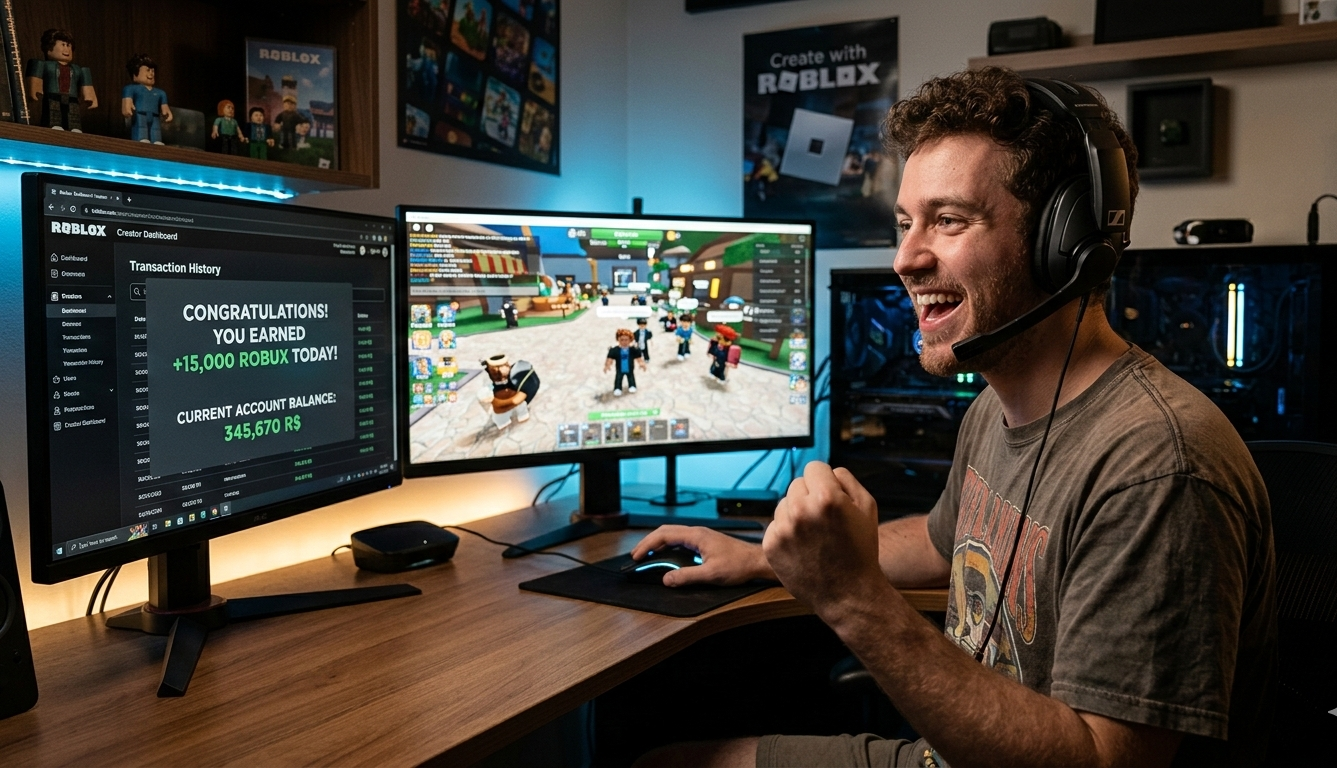
If you’ve ever opened Roblox and wondered how some creators turn simple ideas into massive hits earning thousands — or even millions — of Robux, you’re not alone. What started as a sandbox platform has evolved into a creator-driven economy where teenagers, hobbyists, and even full studios build games that rival professional titles.
The real opportunity? You don’t need a massive budget or a game development degree. With the right strategy, creativity, and consistency, you can build a Roblox game that’s both fun and profitable.
This guide will walk you through everything — from getting started to earning Robux and even converting it into real money.
Why Game Creation Is a Great Way to Earn Robux
Roblox isn’t just a gaming platform — it’s a creator marketplace. Millions of players log in daily looking for fresh experiences. When you build a game, you tap into:
- A global audience
- A built-in payment system (Robux)
- Social sharing and discovery tools
- Monetization features like game passes and developer products
Unlike reselling limited items or joining donation groups, creating your own game gives you full control over your income stream. You’re not relying on someone else’s success — you’re building your own.
Top creators on Roblox have built full-time careers. Even small developers can earn steady Robux if their game gains traction.
3 Popular Games That Creators Have Made
These games prove how powerful one idea can become:
1. Adopt Me!
- Genre: Roleplay / Pet Simulation
- Why it works: Trading, collecting, social interaction
- Success factor: Regular updates and seasonal events
Adopt Me! became one of Roblox’s biggest games by combining cute pets with social trading mechanics. The emotional attachment to pets keeps players coming back.
2. Brookhaven RP
- Genre: Roleplay / Open World
- Why it works: Freedom and creativity
- Success factor: Simple mechanics but huge social appeal
Brookhaven proves that you don’t need complicated combat systems. Sometimes, freedom and imagination are enough.
3. Blox Fruits
- Genre: Action / Adventure
- Why it works: Leveling, grinding, PvP combat
- Success factor: Deep progression system
Blox Fruits attracts players who love power progression and competitive gameplay.
Lesson from These Games
All three games share:
- Clear core concept
- Strong progression or social system
- Frequent updates
- Smart monetization
You don’t need to copy them — but you can learn from their structure.
What You Need to Get Started
Creating a game on Roblox is far more accessible than most beginners imagine. You don’t need expensive software, advanced coding degrees, or a professional development team. What you truly need is the right foundation, a willingness to learn, and consistent effort. Here’s a deeper look at what helps you begin your journey as a Roblox game creator.
1. Roblox Studio – Your Main Development Tool
The most important tool you’ll need is Roblox Studio, the official game development software provided by Roblox. The best part? It’s completely free.
Roblox Studio gives you everything required to build, script, test, and publish your game in one place. You can:
- Design maps and environments using built-in building tools
- Insert objects, models, and assets from the marketplace
- Write and test scripts directly inside the editor
- Playtest your game instantly before publishing
The interface may look overwhelming at first, but with practice, it becomes intuitive. Many successful developers started with zero experience and learned simply by experimenting inside Roblox Studio.
2. Basic Scripting Knowledge (Lua)
To move beyond simple builds and create interactive, engaging mechanics, you’ll need to understand the basics of Lua scripting, the programming language used in Roblox.
The good news is that Lua is beginner-friendly compared to many other languages. You don’t need to become an expert overnight. Start by learning:
- Variables and data types
- Events and triggers
- Basic functions
- Player interactions
- Simple game mechanics like scoring or teleporting
Even small scripting skills allow you to create powerful features. Over time, as your knowledge grows, you can build more advanced systems like leveling mechanics, inventory systems, and in-game economies.
3. Creativity and Patience
Technical skills are important, but mindset matters just as much.
Creativity helps you:
- Develop unique game concepts
- Design engaging maps and environments
- Think of mechanics that stand out from competitors
Patience helps you:
- Fix bugs without frustration
- Improve your game after feedback
- Continue learning when things feel difficult
Your first game will not be perfect — and that’s completely normal. Almost every successful Roblox developer started with small, imperfect projects. The key is not perfection, but progress.
4. Optional but Extremely Helpful Skills
While not mandatory, certain additional skills can significantly improve your game’s success.
- Thumbnail and Icon Design Skills
Your game’s thumbnail is the first thing players see. An eye-catching, professional-looking image increases clicks and boosts visibility. - UI (User Interface) Design Basics
Clean menus, readable text, and smooth navigation make your game feel polished and enjoyable. A confusing interface can drive players away quickly. - Understanding Player Psychology
Knowing why players return to games is powerful. Features like rewards, progression systems, daily bonuses, and limited-time events encourage engagement and retention.
How to Become a Roblox Game Creator
Becoming a game creator on Roblox is not about being an expert from day one — it’s about taking structured steps, learning consistently, and improving with each project. Every successful developer once started with a blank screen in Roblox Studio.
Here’s a clear and practical roadmap to help you begin your journey.
Step 1: Download and Set Up Roblox Studio
Your first step is installing Roblox Studio, the official development software available directly from the Roblox website.
Once installed, take time to explore the interface instead of rushing into building. Familiarize yourself with:
- The Explorer panel (where objects are organized)
- The Properties window (where you adjust object settings)
- The Toolbox (where you can add models and assets)
- The Play Test feature (where you test your game instantly)
Understanding the workspace early will save you confusion later.
Step 2: Learn the Core Building and Scripting Basics
Before attempting complex projects, focus on mastering the fundamentals. Strong basics create strong games.
Start by learning:
- How to move, resize, and rotate parts to design simple maps and structures
- How to anchor objects properly so they stay fixed in place during gameplay
- Basic Lua scripting concepts such as variables, functions, and events
- Player spawn mechanics to control where and how players enter the game
You don’t need advanced coding immediately. Even simple scripts — like opening a door or awarding points — will teach you how logic works inside a game.
Practice small features repeatedly until they feel natural.
Step 3: Build a Simple Prototype First
One of the biggest mistakes beginners make is trying to build a massive open-world RPG as their first project. That often leads to frustration and unfinished work.
Instead, start with something manageable like:
- An Obby (Obstacle Course) where players jump across platforms and avoid hazards
- A Basic Tycoon Game where players generate income and upgrade structures
- A Simple Simulator focused on clicking, collecting, or leveling up
These game types teach core mechanics such as progression systems, rewards, and player feedback loops — all essential for larger projects later.
Your goal at this stage is learning, not perfection.
Step 4: Test Your Game With Friends or Early Players
Once you have a working prototype, invite friends to test it. Watching real players interact with your game is one of the most valuable learning experiences.
Pay attention to:
- Where players get confused
- Where they lose interest
- Where bugs appear
- How long they stay engaged
Avoid defending your game emotionally. Instead, treat feedback as data that helps you improve.
Early feedback often reveals problems you didn’t notice yourself.
Step 5: Publish Early and Improve Continuously
Many beginners wait too long to publish because they want everything to be perfect. However, growth comes from real-world testing.
When your game is stable and playable:
- Publish it publicly
- Monitor analytics and player activity
- Fix bugs quickly
- Add small but consistent updates
Even small improvements signal activity to players and increase trust in your game.
Remember, most successful Roblox games were not perfect at launch. They evolved through updates, feedback, and constant iteration.
Types of Games You Can Create
Your success depends on choosing the right genre.
1. Simulator Games
- Clicking simulators
- Pet simulators
- Farming simulators
These are easy to monetize through boosts.
2. Roleplay Games
- City RP
- School RP
- Fantasy RP
Monetization often comes from customization.
3. Tycoon Games
- Factory tycoon
- Restaurant tycoon
- Theme park tycoon
Players spend Robux to speed up progress.
4. Obbies
Simple but popular. Great for beginners.
5. Competitive Games
- PvP arenas
- Survival games
- Battle-style games
These rely on skill progression and cosmetic purchases.
Choose a genre you personally enjoy — passion reflects in your game quality.
How to Earn Robux from Your Game
This is where profitability comes in.
1. Game Passes - One-time purchases for perks:
- Double XP
- VIP access
- Exclusive areas
2. Developer Products - Repeat purchases:
- In-game currency
- Revives
- Boosters
3. In-Game Ads - If you own multiple games, cross-promote.
4. Private Servers - Charge Robux for private gameplay sessions.
5. Cosmetic Items - Skins, trails, pets, effects — players love personalization.
The key: Never make your game pay-to-win. Balance is crucial.
Growing Your Game
Creating is just step one. Growth requires strategy.
1. Eye-Catching Thumbnails
Your thumbnail determines clicks.
2. Strong Title & Description
Use searchable keywords.
3. Frequent Updates
Even small updates signal activity.
4. Community Building
Create:
-
Discord server
-
Roblox group
-
Social media presence
5. Events & Limited Items
Limited-time rewards increase urgency.
6. Collaboration
Partner with other small creators for cross-promotion.
Consistency builds momentum.
Converting Robux to Real Money
Roblox offers the Developer Exchange Program (DevEx). Requirements usually include:
- Minimum Robux balance
- Verified account
- Premium membership
Through DevEx, eligible developers can convert Robux into real-world currency.
Important:
- Only earned Robux (not purchased) qualify
- There are payout thresholds
Many developers treat Roblox as a serious income stream — but success requires effort and patience.
Tips for Success
Here are the most important lessons:
1. Focus on Retention, Not Just Clicks - Ask: Why would players come back tomorrow?
2. Study Analytics - Use Roblox analytics tools to track:
- Playtime
- Retention rate
- Revenue per user
3. Keep Learning Lua - Better scripting = better mechanics.
4. Don’t Copy — Innovate - Inspired ideas are good. Clones usually fail long-term.
5. Listen to Your Community - Players tell you what they want — if you listen.
6. Be Patient - Most successful games took months or years to grow.
Final Thoughts: Fun First, Profit Second
The biggest mistake new creators make? Building for money instead of fun. Players can feel when a game is just a cash grab. But when a game is genuinely enjoyable, monetization becomes natural. Roblox has proven that creativity can turn into real income. Whether you want pocket Robux or dream of becoming a full-time developer, the opportunity is there.
Start small. Learn constantly. Update consistently.
Your first game might not be the next Adopt Me — but it might be the start of something bigger.