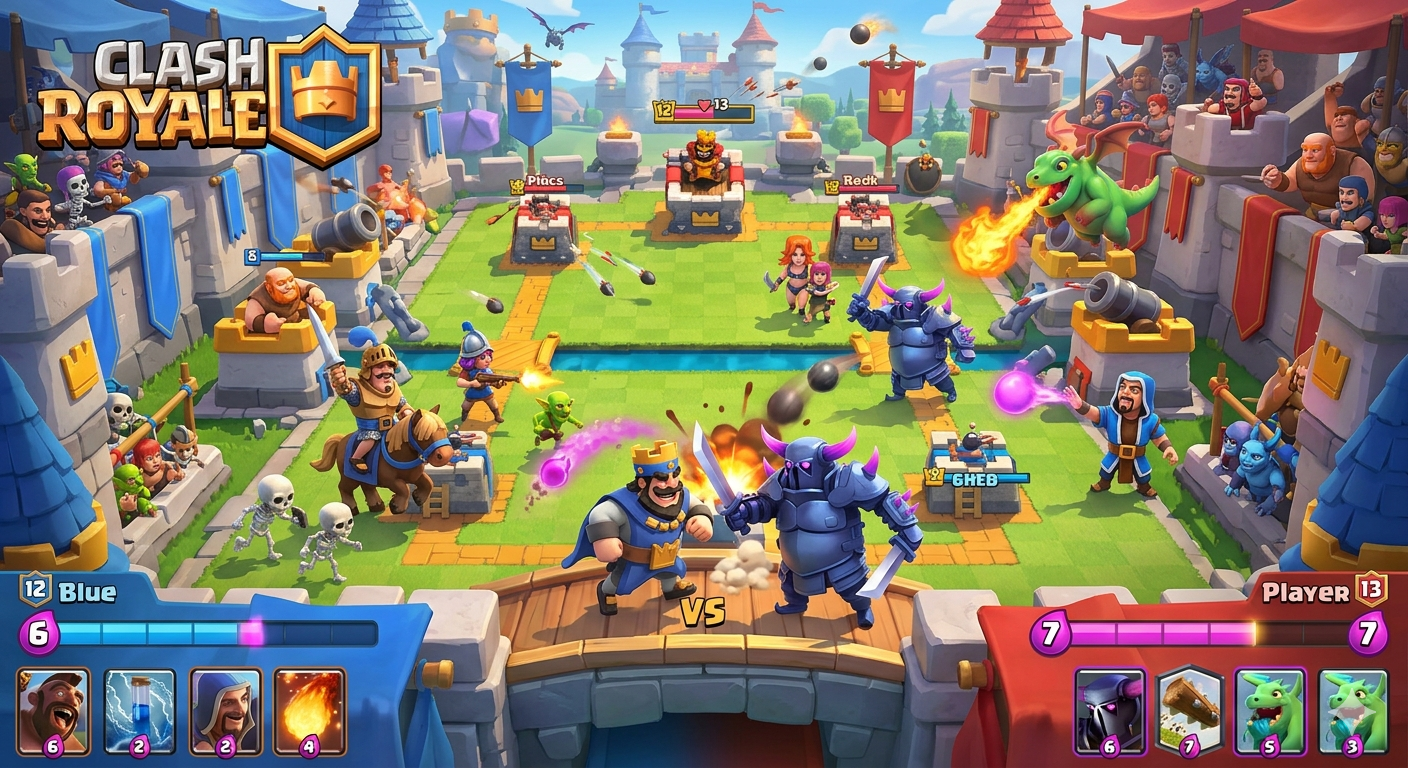
At first glance, Clash Royale looks simple—drop cards, defend towers, and push for victory. But after a few matches, something becomes clear: two players with similar skill levels can have completely different outcomes. Why? The answer often lies in one thing—deck building.
Before a single card is played in battle, your deck has already shaped how the match will unfold. It influences your strategy, your reactions, and even your chances of winning certain situations. Let’s break down how deck building quietly—but powerfully—decides outcomes in Clash Royale.
It All Starts Before the Match Begins
Most players focus on what happens during a match—timing, placement, and reactions. But experienced players know the real game begins earlier.
Your deck determines:
- How you attack
- How you defend
- How quickly you can respond
- What kind of pressure you can apply
In simple terms, your deck is your game plan.
If your deck lacks balance or synergy, even perfect gameplay can feel difficult. On the other hand, a well-built deck can make decisions feel smoother and more natural.
The Importance of Balance
One of the biggest factors in deck building is balance. A strong deck isn’t just about powerful cards—it’s about how those cards work together.
A balanced deck usually includes:
- A win condition (your main way to deal damage)
- Defensive options
- Support cards
- A mix of high and low elixir costs
Without balance, problems show up quickly.
- Too many expensive cards? You’ll struggle to keep up
- Too many low-impact cards? You may lack finishing power
- Weak defense? You’ll lose control of the match
Balance doesn’t guarantee wins—but it gives you the tools to handle different situations.
Synergy Changes Everything
Beyond balance, synergy is what makes a deck truly effective. Synergy means your cards complement each other. Instead of acting alone, they work as a team.
For example:
- A tank absorbing damage while support units deal damage
- Spells that clear the way for your push
- Defensive cards that transition into counterattacks
When synergy is strong, your plays feel connected. One move naturally leads into another.
Without synergy, your deck feels disconnected. You may have strong cards, but they don’t create meaningful impact together.
Your Deck Defines Your Playstyle
Deck building isn’t just about strength—it’s about how you play.
Different decks encourage different styles:
- Fast-cycle decks reward quick decisions and constant pressure
- Heavy decks focus on timing and powerful pushes
- Control decks rely on defense and counterattacks
Once you choose a deck, you’re also choosing a way to approach the game.
This is why copying someone else’s deck doesn’t always work. If the playstyle doesn’t match your instincts, it can feel uncomfortable and difficult to execute. The best decks are the ones that align with how you naturally think and react during matches.
Matchups Matter More Than You Think
Even with a strong deck, not every matchup will feel fair. Some decks naturally perform better against others. This is part of the game’s depth.
For example:
- A deck strong against ground units might struggle against air-focused strategies
- A slow deck may have trouble keeping up with fast-cycle pressure
This doesn’t mean the match is unwinnable—it just means your approach needs to adapt.
Understanding your deck’s strengths and weaknesses helps you make better decisions, especially in tough matchups.
Elixir Management Starts With Your Deck
Elixir is at the heart of Clash Royale, and your deck plays a huge role in how you manage it.
A well-structured deck allows you to:
- Maintain consistent pressure
- Defend without overspending
- Recover from mistakes more easily
If your deck is too heavy, you may find yourself waiting too often. If it’s too light, you might struggle to create impactful plays.
Good deck building creates a smooth elixir flow. You always have options, and you’re rarely stuck without a response.
Small Changes Can Have Big Effects
One of the most interesting things about deck building is how small adjustments can completely change your results.
Switching just one card can:
- Improve your defense against certain threats
- Speed up your cycle
- Add new strategic options
This is why experienced players constantly tweak their decks. They don’t rely on one fixed setup—they adapt based on what they face and what they need.
It’s not about finding a “perfect” deck. It’s about refining your deck over time.
Why Simplicity Often Wins
It’s tempting to build complex decks with multiple strategies. But in many cases, simpler decks perform better.
Why?
Because they’re easier to execute.
- Clear roles for each card
- Predictable combinations
- Fewer complicated decisions
When a deck is simple, you can focus more on timing and placement instead of constantly figuring out what to do.
That clarity often leads to better performance, especially under pressure.
Learning Your Deck Is More Important Than Changing It
Another common mistake players make is switching decks too often.
Every deck takes time to understand:
- When to attack
- When to defend
- How to handle specific situations
If you keep changing decks, you never fully learn any of them.
Players who improve steadily often stick with one deck long enough to master it. They learn its strengths, adapt to its weaknesses, and become more confident in their decisions.
Over time, this familiarity becomes a major advantage.
Deck Building and Confidence
Your deck doesn’t just affect strategy—it affects confidence.
When you trust your deck:
- You make decisions faster
- You play more decisively
- You stay calm under pressure
When you don’t trust your deck:
- You hesitate
- You second-guess your moves
- You feel less in control
Confidence plays a big role in outcomes, and it often starts with how comfortable you feel with your deck.
Final Thoughts
In Clash Royale, deck building is more than just picking cards—it’s the foundation of every match you play. It shapes your strategy, influences your decisions, and determines how effectively you can respond to challenges.
While skill, timing, and experience all matter, your deck quietly guides everything you do. A well-built deck doesn’t guarantee victory, but it gives you the tools to compete, adapt, and improve.
In the end, success isn’t about having the most powerful cards—it’s about building a deck that works together, fits your style, and helps you play with confidence.